Most people do not walk into a dental clinic thinking they need an implant. They come in because a tooth has been bothering them for months, because their denture slips at dinner, or because someone in their family finally convinced them to get checked. The signs that point toward dental implants are often subtle at first, and by the time the situation feels urgent, some bone loss has usually already happened. Knowing the specific warning signs of implant candidacy early gives you options. Wait long enough, and those options narrow. This guide explains the five clearest signals that a dental implant may be the right next step, written from the clinical perspective of the team at St Jean Dental Care in Quatre Bornes.
Table of Contents
- Quick Takeaways
- Sign 1: You Have a Missing Tooth and Have Not Replaced It
- Sign 2: A Tooth Is Loose, Cracked, or Failing
- Sign 3: Your Face Looks Different Around the Jaw
- Sign 4: Your Denture No Longer Fits Properly
- Sign 5: You Avoid Certain Foods or Struggle to Speak Clearly
- Comparing Tooth Replacement Options
- Are You a Good Implant Candidate?
- Frequently Asked Questions
Quick Takeaways
| Key Insight | Explanation |
|---|---|
| A gap left untreated accelerates bone loss | The jawbone beneath a missing tooth loses width quickly without root stimulation, making early replacement easier and more predictable. |
| Loose teeth in adults are a red flag | Adult teeth should never feel mobile. Looseness signals advanced gum disease or bone loss, both of which point toward implant candidacy. |
| A sunken jaw appearance is a clinical warning | Visible facial changes around the jaw or cheeks indicate bone resorption that an implant can halt and, in some cases, partially address through grafting. |
| Ill-fitting dentures are not a normal inconvenience | Dentures loosen over time because the ridge they sit on shrinks. That shrinkage is itself evidence of ongoing bone loss. |
| Chewing avoidance changes your nutrition | When patients unconsciously avoid hard or fibrous foods, it affects digestion and long-term health, not just comfort. |
| CBCT imaging confirms candidacy accurately | 3D cone beam imaging at St Jean Dental Care gives a precise bone density and volume assessment before any treatment plan is confirmed. |
| Acting sooner simplifies the procedure | Placing an implant before significant bone resorption often reduces the need for extensive bone grafting. |
Sign 1: You Have a Missing Tooth and Have Not Replaced It
This is the most common and most underestimated situation seen in any implant consultation. A tooth comes out, either from decay, an accident, or an extraction, and the patient puts replacement on the back burner. Life gets busy. The gap is not always visible. It does not always hurt. So it waits.
The problem is that the jawbone does not wait. Bone loss at the site of a missing tooth begins almost immediately after extraction, because the bone in that area depends on the mechanical stimulation of a tooth root to maintain its density and volume. Without that stimulation, the body resorbs the bone gradually. The longer the gap sits unfilled, the more bone disappears, and the more complex any future implant placement becomes.
For patients in Quatre Bornes and across Mauritius, a missing tooth is often treated as an aesthetic problem rather than a structural one. That framing is the mistake. Patients who present after a year or more without replacement frequently require additional bone assessment and sometimes grafting before an implant can be placed, steps that could often be avoided with earlier action.
Clinical note: If you have recently had a tooth extracted, ask your dentist about implant timing at that same appointment. Placing an implant sooner after extraction, when bone volume is still adequate, is almost always simpler and more predictable than waiting.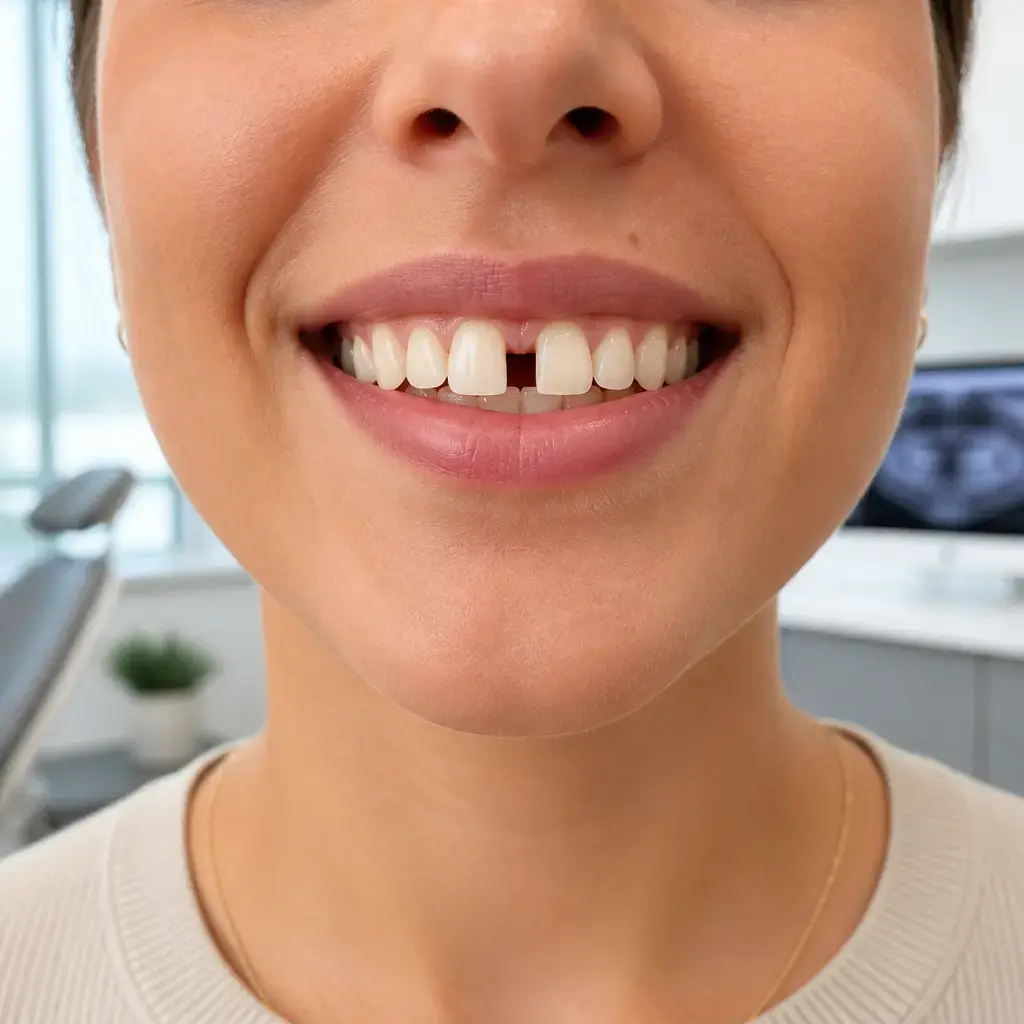
Sign 2: A Tooth Is Loose, Cracked, or Failing
Adult teeth are not supposed to move. If a tooth feels loose under finger pressure or shifts when you bite down, that mobility signals that the supporting structures, either the bone or the periodontal ligament, have been compromised. The two most common culprits are advanced gum disease and significant bone loss. Both can progress to the point where the tooth cannot be saved.
When a tooth is cracked beyond repair
Cracks that extend below the gumline are a different category of problem. A crack that reaches the root often cannot be stabilized with a crown or a filling. In these cases, tooth extraction becomes necessary, and the question shifts immediately to what replaces the tooth. A dental implant is designed to recreate the root structure rather than just the visible crown.
Persistent pain that does not resolve with treatment
Chronic or recurring pain around a specific tooth, particularly pain that has not responded to a filling or root canal treatment, can indicate that the tooth is beyond the point of conservative repair. This is an appropriate time to discuss extraction and implant candidacy with your dentist. Patients at St Jean Dental Care who come in with long-standing tooth pain often leave that first consultation with a clearer, less anxious picture of their treatment options.
A tooth that cannot be saved is not the end of the story. It is the beginning of a decision about what comes next, leading toward a stable, long-term replacement.
Sign 3: Your Face Looks Different Around the Jaw
This sign is the one patients most often miss because it happens slowly. When teeth are absent, the jawbone in that region begins to resorb. Over months and years, this bone loss changes the contour of the face. The cheeks may appear slightly hollow. The lower jaw can look shorter or more recessed than it once did. Patients sometimes notice this in photographs before they connect it to their dental history.
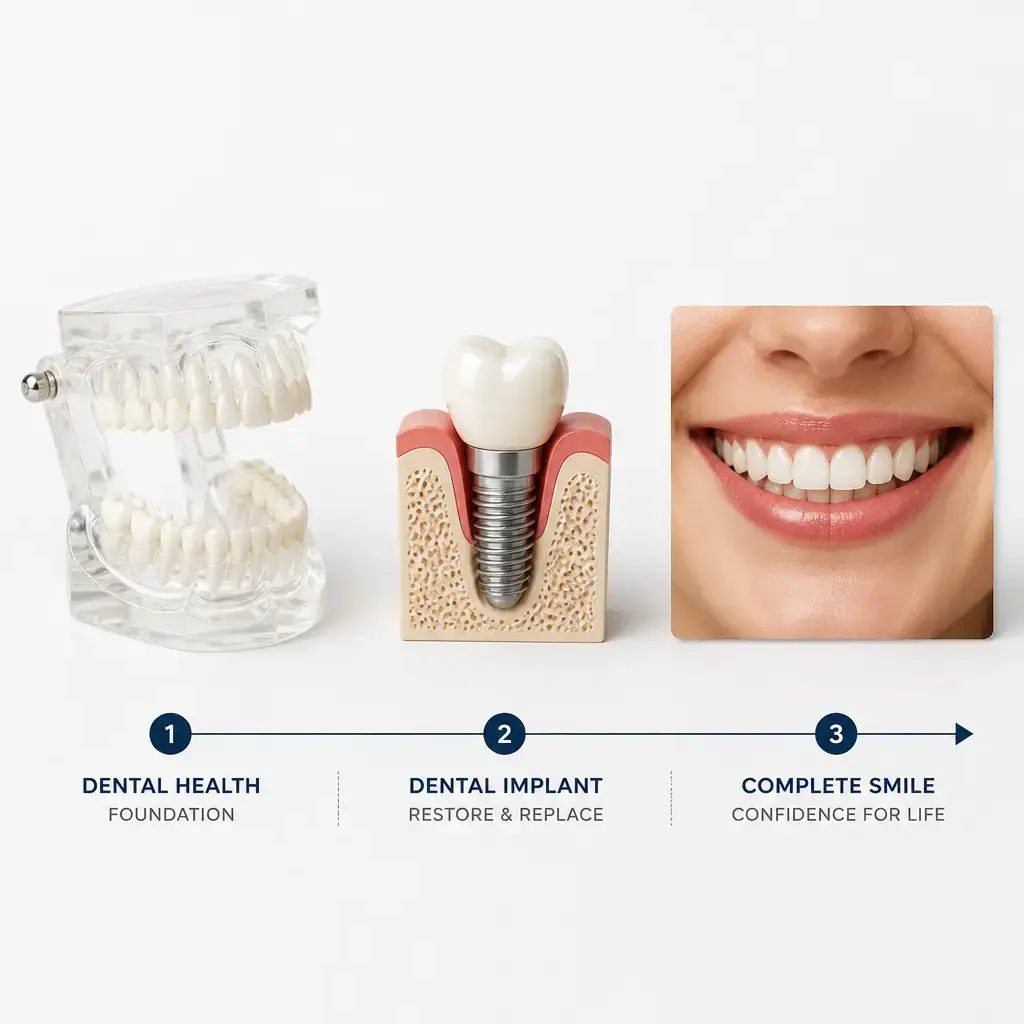
The mechanism is straightforward. Jawbone density is maintained by the pressure transmitted through tooth roots during chewing. Remove the root, and the bone receives no signal to maintain itself. The body redirects its resources away from bone it is no longer using. Dental implants, which are anchored into the jawbone with a titanium post, help maintain stimulation to the surrounding bone. Bridges and traditional dentures restore the visible crown but do not replace the root structure beneath the gumline.
At St Jean Dental Care, CBCT 3D imaging is used at the assessment stage to measure bone density and volume. This imaging gives the clinician a clear picture of how much bone is present and whether the site is ready for implant placement or requires preparatory bone grafting first.
Clinical note: If you have been told you may lack sufficient bone for an implant, a comprehensive assessment using 3D cone beam imaging can clarify your options. Bone volume assessments made from standard planar X-rays alone provide limited perspective compared to volumetric 3D scans.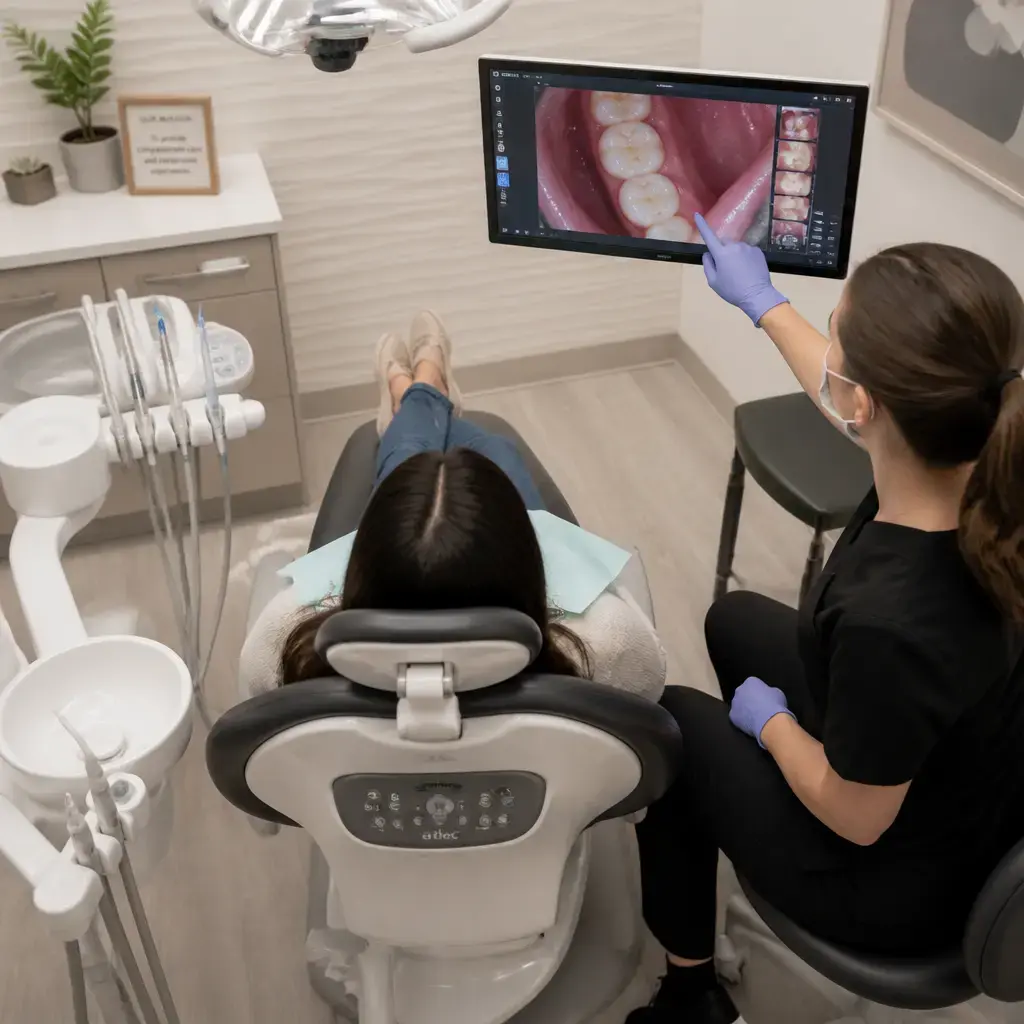
Sign 4: Your Denture No Longer Fits Properly
Dentures that once fit well and now slip, rock, or require more adhesive to stay in place are not just inconvenient. They are evidence of an ongoing process. The ridge that the denture sits on is gradually shrinking due to bone resorption.
This is a progressive situation. As bone resorbs, the fit of the denture changes. This can lead to compensatory chewing habits, dietary restrictions, and social discomfort. Many patients adapt to this discomfort without realizing that restorative alternatives exist.
Implant-retained solutions for denture wearers
For patients whose dentures have become unstable, implant-retained overdentures offer a secure alternative. A small number of implants placed strategically in the jaw can anchor a denture in place, significantly reducing movement and improving chewing comfort. For patients with sufficient remaining bone and suitable oral health, a full fixed implant bridge may also be considered.
The key assessment for implant candidacy in denture wearers is whether sufficient bone remains to support the implants. Early evaluation before severe ridge atrophy occurs helps keep treatment straightforward.
Sign 5: You Avoid Certain Foods or Struggle to Speak Clearly
Pay attention to your diet for a moment. Have you stopped eating raw carrots, crusty bread, or foods that require firm biting force? Many patients adapt their habits to avoid chewing discomfort without actively realizing it. This dietary restriction can affect overall nutrition, as chewing is the first step in proper digestion.
Speech changes are another functional sign worth noting. Missing front teeth, or multiple missing posterior teeth that alter bite alignment, can change the way airflow and tongue contact produce specific sounds. Patients sometimes notice a slight lisp or subtle difficulty articulating certain syllables clearly.
Both restricted eating and altered speech point toward a bite that is no longer functioning optimally. Restoring missing teeth with implants aims to re-establish stable bite function alongside aesthetic harmony.
Comparing Tooth Replacement Options
| Feature | Dental Implant | Fixed Bridge | Removable Denture |
|---|---|---|---|
| Bone preservation | Maintains root stimulation in jawbone | Bone beneath the gap continues to resorb | Gradual ridge resorption continues |
| Adjacent teeth affected | No, stands independently | Yes, adjacent teeth are prepared for crowns | Clasps may place pressure on natural teeth |
| Chewing function | Comparable to natural teeth | Good functional restoration | Variable stability and bite force |
| Longevity | High long-term survival with proper care | May require replacement over time | Requires periodic relining or replacement |
| Daily maintenance | Standard brushing and flossing | Specialised cleaning under the bridge | Daily removal and cleaning |
| Suitability for single tooth | Yes | Yes | Possible, but less common |
Are You a Good Implant Candidate?
Recognizing the signs is the first step; confirming actual candidacy requires a clinical assessment. The main factors that determine whether an implant can be placed include bone volume at the intended site, periodontal health, general medical history, and healing capacity.
Patients with well-managed systemic conditions can often receive implants safely. Smoking increases the risk of complications and failure, and patients are counselled on these risks prior to treatment. Candidacy is assessed individually through clinical examination and diagnostic imaging.
At St Jean Dental Care, the assessment process begins with CBCT 3D imaging to evaluate bone height, width, and density at the proposed site. In addition, the clinic provides same-day crowns and restorative workflows in-house, supporting coordinated care from planning through to final restoration.
For anyone in Mauritius considering tooth replacement, an initial clinical consultation provides clear information on your individual suitability. You can schedule a consultation at St Jean Dental Care to discuss your options, learn more about our dental implant services, or explore our full range of dental treatments.
Frequently Asked Questions
How do I know if I need a dental implant or a bridge?
The clearest distinction is whether adjacent teeth need to be prepared. A bridge requires preparing the natural teeth on either side of the gap to support the restoration. An implant stands independently, preserving healthy neighboring teeth and maintaining stimulation to the jawbone beneath the gap.
Can I get a dental implant years after losing a tooth?
Yes, in many cases. The primary consideration after prolonged tooth loss is bone resorption. If substantial bone volume has been lost, a bone grafting procedure may be recommended before or during implant placement. A CBCT 3D scan evaluates the remaining bone structure to determine the appropriate treatment approach.
What are the dental implant signs that indicate the procedure has failed?
Signs that warrant clinical review include persistent pain after the initial healing phase, mobility of the implant, swelling or infection in the surrounding gum tissue, or difficulty during biting. While implant complications are relatively uncommon when planned thoroughly, any unexpected symptoms should be evaluated promptly by your dentist.
Is tooth loss in Quatre Bornes and Mauritius treated differently than elsewhere?
The clinical principles of implant dentistry follow international standards. Diagnostic tools like CBCT 3D imaging allow comprehensive assessment and treatment planning locally in Quatre Bornes without requiring external referrals for standard scans.
Does getting a dental implant hurt?
The procedure is performed under local anaesthetic, and patients generally report manageable sensations during placement. Post-operative discomfort is typically addressed with standard over-the-counter pain relief for a few days. The healing phase, known as osseointegration, occurs over several weeks as the implant integrates with the jawbone.
How soon after a tooth extraction should I consider an implant?
Timing depends on individual clinical factors. In select cases, an implant can be placed at the time of extraction (immediate placement), while in others, a healing period of several weeks or months is advised. Discussing tooth replacement prior to or at the time of extraction helps preserve bone and optimize treatment timing.