Losing one tooth is a dental concern with well-established solutions, yet many patients exploring dental implants in Quatre Bornes arrive at their initial consultation unsure of what happens on the day of surgery, how long healing takes, or why the process extends over several months. A single implant replaces both the missing tooth crown and its root. This guide outlines the stages you will encounter, from initial three-dimensional imaging to final crown placement.
Table of Contents
- Quick Takeaways
- Is a Single Tooth Implant Right for You?
- Implant Versus Bridge: What Changes for Your Other Teeth
- Consultation and 3D Imaging
- Treatment Planning and Preparation
- Implant Placement Surgery: What Happens on the Day
- Healing and Osseointegration
- Second-Stage Surgery and the Abutment
- Crown Fitting and Same-Day Options
- Aftercare and Common Mistakes
- Frequently Asked Questions
Quick Takeaways
| Key Insight | Explanation |
|---|---|
| Candidacy depends on bone and gums | You need adequate jawbone density to anchor the implant and healthy gum tissue surrounding the space. A bone graft can rebuild lost volume, though it extends overall treatment time. |
| Neighbouring teeth stay untouched | A single implant does not require preparation or grinding down of adjacent natural teeth, unlike a conventional fixed bridge. |
| Plan for several months | Bone typically requires two to six months to integrate with the implant post before the final crown is fitted. |
| Detailed 3D imaging | A 3D CBCT scan assesses bone height, width, and nearby anatomical structures such as nerves and sinuses before surgical planning begins. |
| Tobacco affects healing | Smoking restricts blood flow to oral tissues, so reducing or stopping smoking is critical during the recovery period. |
| Early aftercare matters | Managing swelling, maintaining gentle oral hygiene, and avoiding chewing on the surgical site during the initial weeks support proper recovery. |
Is a Single Tooth Implant Right for You?
A single tooth implant is often considered when one tooth is missing and adjacent teeth are healthy. The implant consists of a titanium post placed into the jawbone, an abutment connector, and a custom crown. The post acts as an artificial root, providing a stable foundation for the replacement tooth.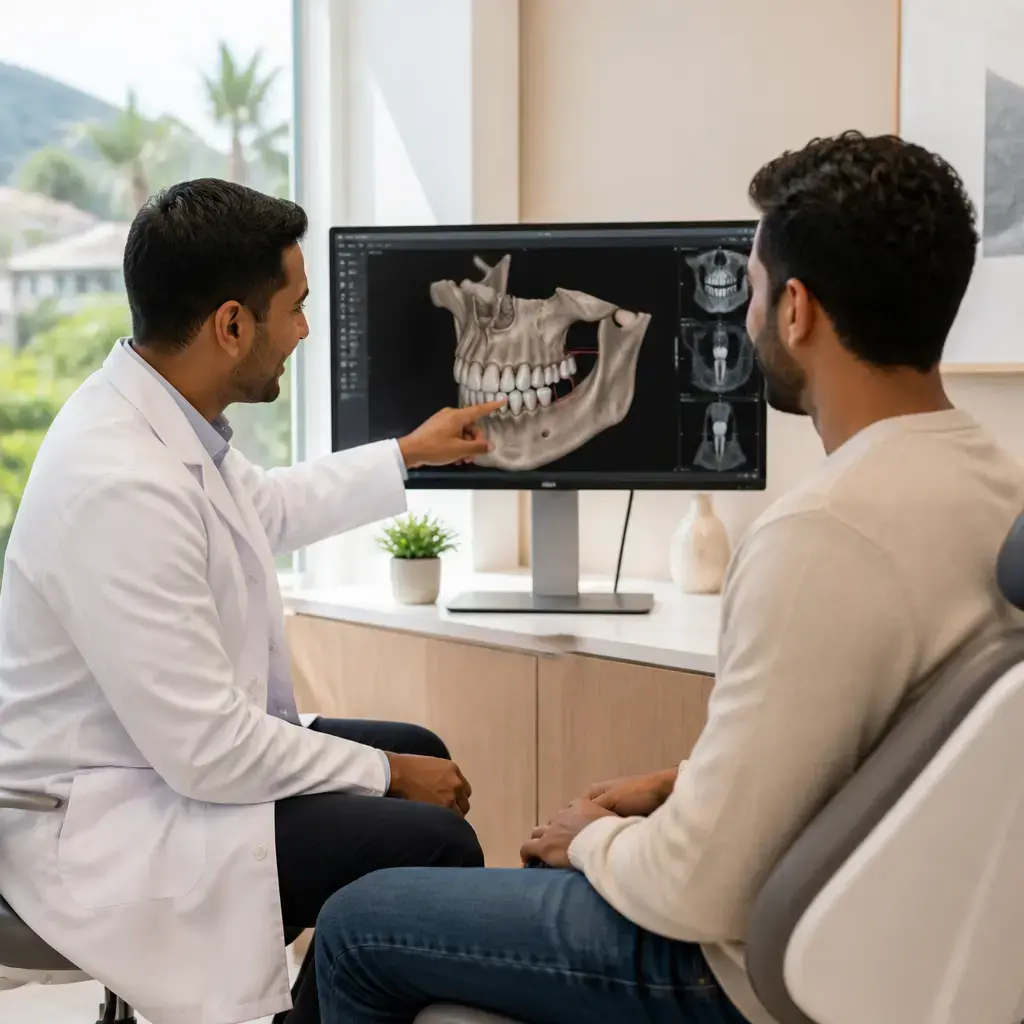
A clinical assessment evaluates whether an implant is appropriate for your specific oral health. Key considerations include complete jaw growth, healthy periodontal tissues, and sufficient bone volume to support the fixture.
Bone volume and the bone graft question
When a tooth has been missing for an extended period, the underlying ridge can gradually lose height and width. If bone volume is insufficient for implant stability, a bone graft may be recommended to rebuild the area. This step adds healing time and is factored into your individual treatment plan from the outset.
Gum health and smoking
Healthy gums are essential for implant longevity. Active periodontal disease must be treated and fully resolved before surgical placement to reduce the risk of complications. Smoking also impairs blood circulation and tissue healing, which can influence surgical outcomes.
Pro tip: Bring a full list of your current medications and supplements to your consultation, including blood thinners and bone-density medications, as these influence treatment planning.
Implant Versus Bridge: What Changes for Your Other Teeth
A conventional dental bridge requires the adjacent teeth on either side of the gap to be shaped and crowned to support the prosthetic tooth. In contrast, an implant replaces a single tooth independently, preserving the natural structure of neighbouring teeth.
Because an implant post sits directly within the jaw, it stimulates the bone much like a natural root, helping to maintain bone levels over time.
Where a bridge still makes sense
A bridge may remain a suitable option if the bone at the missing tooth site is not ideal for surgery, if medical conditions preclude surgical procedures, or if neighbouring teeth already have extensive restorations that would benefit from full crowns.
| Replacement Option | Effect on Neighbouring Teeth | Bone and Long-Term Considerations |
|---|---|---|
| Single implant with crown | Adjacent teeth remain untouched with no preparation required | Integrates with the jawbone to help maintain bone volume; cleaned like a natural tooth |
| Fixed bridge | Adjacent teeth must be prepared and crowned to support the bridge | Bone below the artificial tooth may resorb over time; margins require dedicated flossing aids |
| Removable partial denture | Clasps rest on neighbouring teeth for retention | Does not stimulate the underlying bone and can feel less stable during chewing |
Consultation and 3D Imaging
The initial appointment focuses on clinical evaluation and diagnostics. Your dentist examines your gums, bite alignment, and adjacent teeth, followed by diagnostic imaging.
What a CBCT scan shows
A CBCT 3D scan generates high-resolution, three-dimensional views of the jawbone. It reveals exact bone height and width, bone density, and the precise position of anatomical structures such as the mandibular nerve canal and maxillary sinuses, allowing for accurate surgical planning.
Questions to ask at your first visit
During your consultation at our clinic in Quatre Bornes, consider discussing the proposed treatment stages, whether any preparatory procedures like bone grafting or atraumatic tooth extraction are advisable, and the anticipated healing timeline for your case.
Treatment Planning and Preparation
Using the diagnostic scans, a comprehensive surgical and restorative plan is mapped out. This includes determining the optimal implant dimension, angulation, and the type of provisional and permanent crown restorations.
Medical review and medication
A review of your medical history helps identify systemic conditions that could affect bone healing, such as unmanaged diabetes. When necessary, your dentist may liaise with your medical doctor to ensure safe surgical protocols.
Preparing your mouth before surgery
Any active decay or periodontal inflammation is addressed prior to surgery. If the tooth being replaced is still present, its removal may occur before or during implant placement, depending on local bone support and tissue health.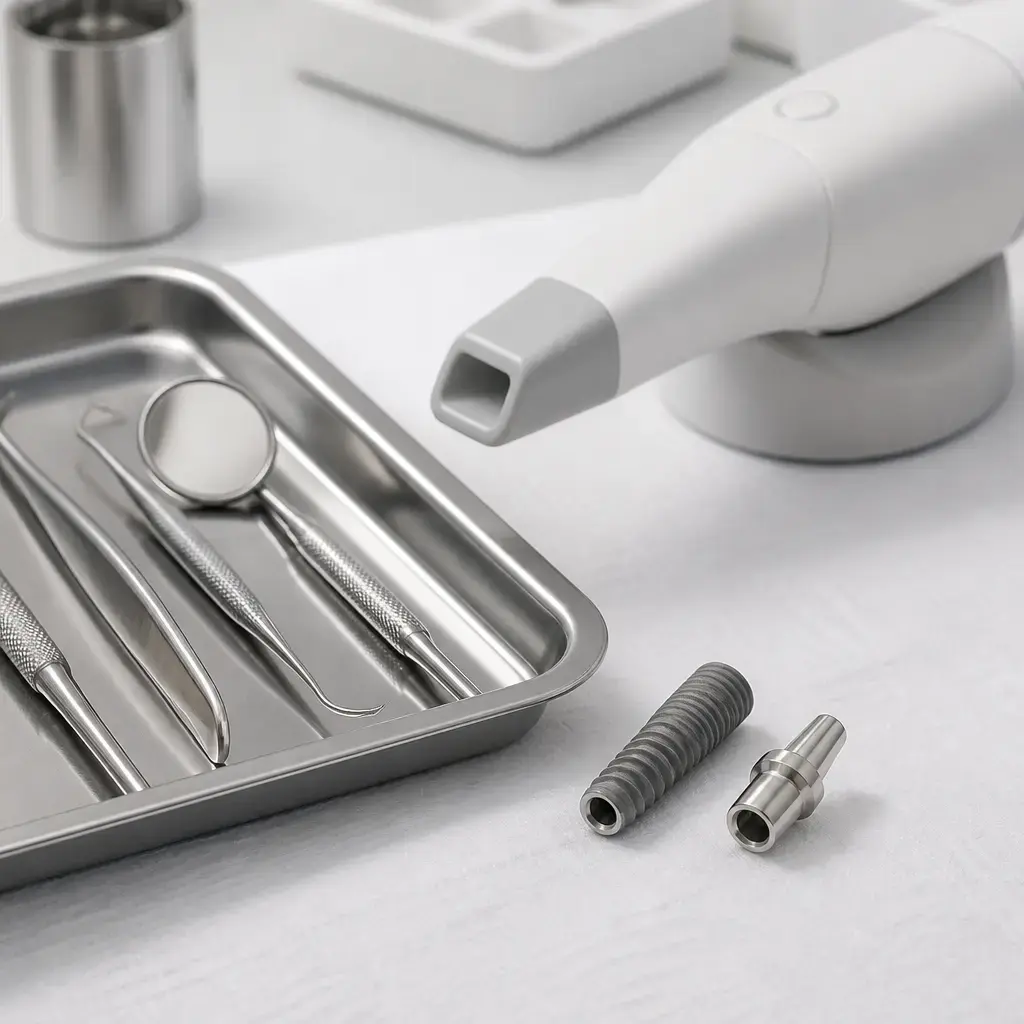
Implant Placement Surgery: What Happens on the Day
On the day of the procedure, local anaesthetic is administered to ensure the treatment area is thoroughly numb. A minor incision in the gum exposes the bone, and a precise channel is prepared to receive the titanium implant fixture.
Local anaesthetic and what you will feel
With local anaesthetic, you remain comfortable throughout the appointment. Patients typically feel gentle pressure and vibration during the site preparation, rather than sharp discomfort.
Placing the implant and closing the gum
Once the implant is secured into the bone, the gum tissue is positioned and closed. Depending on whether a one-stage or two-stage protocol is used, a healing abutment may emerge through the gum, or the implant may remain covered beneath the tissue while initial integration takes place.
Healing and Osseointegration
Following placement, the biological process of osseointegration occurs. During this phase, living bone cells attach directly to the titanium surface, creating a solid anchor for the replacement tooth.
The two-to-six month bonding window
Osseointegration typically spans between two and six months, depending on individual bone density and healing capacity. A temporary tooth may be worn for aesthetic reasons during this phase, provided it is kept free from excessive biting force.
What is normal during the first weeks
Mild swelling, minor bruising, and localised tenderness are common for the first few days and gradually subside. If you experience persistent or increasing pain, fever, or noticeable discharge, contact the clinic promptly for an evaluation.
Second-Stage Surgery and the Abutment
If a two-stage approach was selected, a brief minor procedure uncovers the top of the implant to attach a healing collar or abutment. This allows the surrounding gum tissue to mature into a natural contour around the future crown.
The abutment: the link between implant and crown
The abutment connects the submerged implant to the visible replacement tooth. Its shape and angle are tailored to support healthy gum margins and match your natural bite alignment.
Crown Fitting and Same-Day Options
The final restorative step is fabrication and fitting of the custom crown. The restoration is designed to harmonise in colour, shape, and size with your neighbouring natural teeth.
Healthy, stable gum tissue and thorough integration provide the foundation for an aesthetic and functional dental crown.
Impressions and shade matching
Digital scans record the precise position of the abutment and surrounding tissues. Tooth shade is matched against your natural dentition to ensure a seamless visual blend.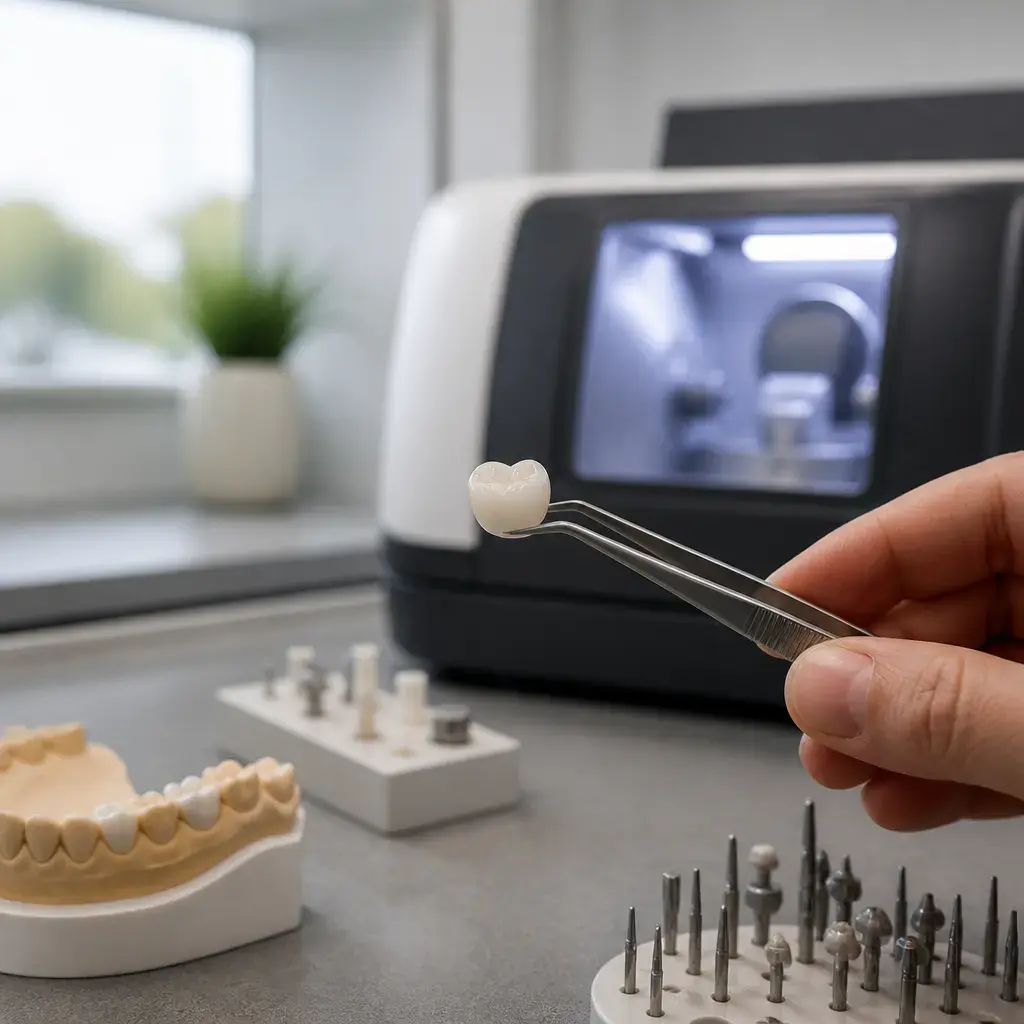
Same-day crowns with in-house milling
For qualifying cases where the implant has fully integrated and soft tissues have stabilised, same-day crowns using in-house digital milling technology allow the final ceramic restoration to be crafted and fitted efficiently on site.
Aftercare and Common Mistakes
Long-term maintenance is essential to protect the gum seal and bone around the implant. Daily plaque control and routine professional cleans help safeguard against peri-implant inflammation.
The first 72 hours
Rest, consume soft foods, and stay well hydrated. Avoid vigorous mouth rinsing, drinking through straws, smoking, and strenuous physical activity during the first few days to allow the surgical site to stabilise.
Common mistakes that cause problems
Avoid chewing directly on the implant site while healing is underway, attend all scheduled review visits, and maintain careful interdental cleaning around the crown margins once restoration is complete.
Frequently Asked Questions
How long does single tooth implant surgery take?
The placement procedure is typically completed in a single appointment, while the full treatment journey spans several months to accommodate bone integration before the final crown is secured.
Is single tooth implant surgery painful?
Local anaesthetic keeps the area numb during surgery so you should not feel pain during the procedure. Mild post-operative soreness over the following few days can usually be managed with standard pain-relief guidance.
Can I get an implant if I have gum disease?
Periodontal conditions must be thoroughly treated and stable before implant placement can be planned, as healthy gum tissue is essential for long-term implant success.
Do I need a bone graft before a single implant?
A bone graft is only required if three-dimensional imaging shows insufficient bone height or width to anchor the implant securely.
Can I eat normally while the implant is healing?
You can eat a varied diet, but you should avoid hard or sticky items and avoid chewing directly on the surgical site during the initial healing window.
Why does the process take so long?
Biological osseointegration requires adequate time for bone to firmly fuse with the titanium implant post, creating a reliable foundation before bite forces are applied to the permanent crown.