Most people dread a wisdom tooth extraction not because of the procedure itself, but because they do not know what is actually going to happen. That uncertainty is almost always worse than the reality. Whether you are dealing with a partially erupted third molar pressing against your other teeth, a recurring infection around an impacted tooth, or pain that flares up every few months with no resolution in sight, understanding the full arc of wisdom tooth extraction in Mauritius from the first consultation through final healing removes the fear and helps you make a clear-headed decision. At St Jean Dental Care in Quatre Bornes, we see patients who have been putting this off for years simply because no one ever explained the process plainly. This article does exactly that.
Table of Contents
- Why Wisdom Teeth Need to Come Out
- Quick Takeaways
- Before the Procedure: Your Consultation and Imaging
- Types of Extraction: Simple, Surgical, and Atraumatic
- Anaesthesia and Sedation Options
- What Happens During the Extraction
- Recovery Timeline: Day by Day
- Complications to Watch For
- Comparing Extraction Approaches
- Frequently Asked Questions
Why Wisdom Teeth Need to Come Out
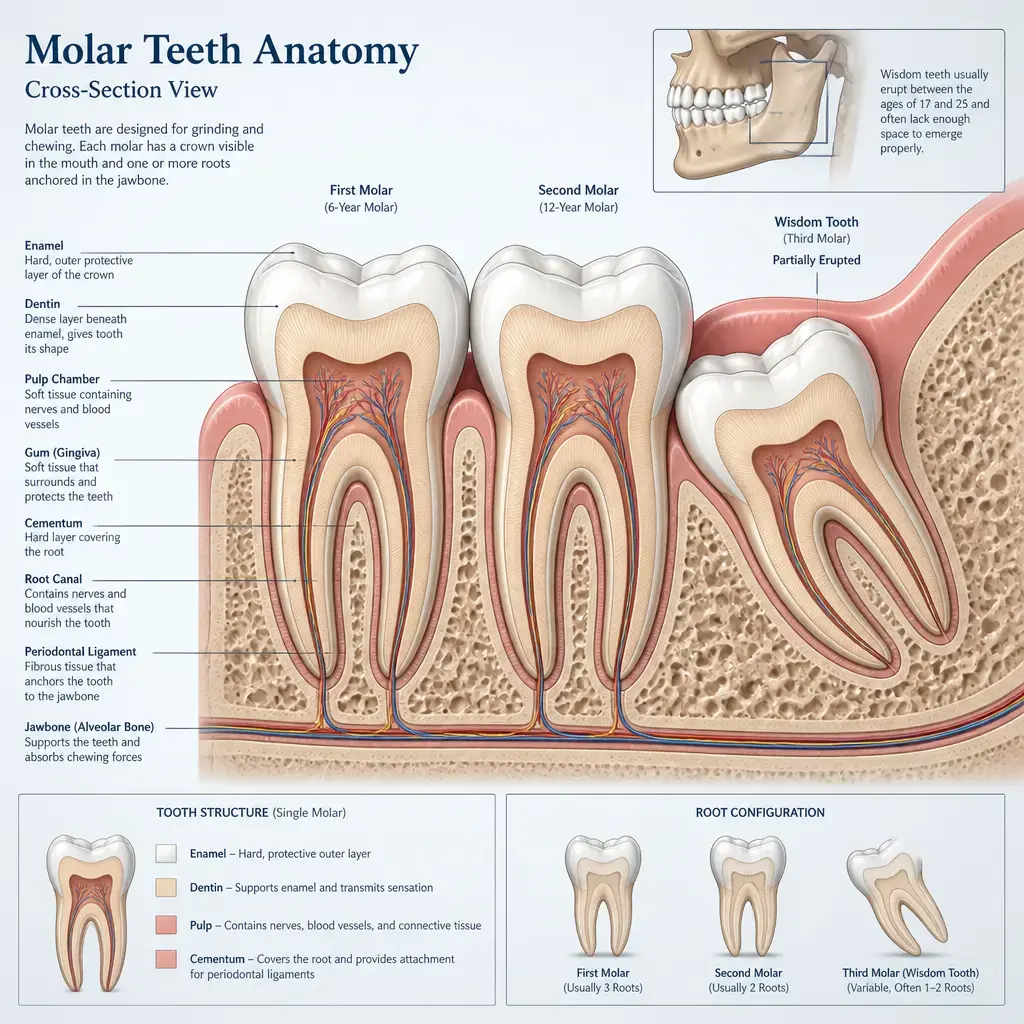
Wisdom teeth, the third molars at the very back of your jaw, are the last adult teeth to erupt, typically between the ages of 17 and 25. The human jaw has evolved to be smaller over time, and there is often simply not enough room for these teeth to grow in properly. When they cannot emerge fully, they become impacted, meaning they are trapped beneath the gum, growing at an angle, or only partially breaking through the tissue.
An impacted wisdom tooth is not just an inconvenience. It creates a pocket between the gum and tooth that is nearly impossible to clean, making it a reliable breeding ground for bacteria. Left unaddressed, this leads to repeated infections, damage to the adjacent second molar, cyst formation, and in some cases bone loss around neighbouring teeth. A tooth that causes no symptoms today can become a serious structural problem within a few years.
The practical upside is that extraction resolves the problem permanently. Once the tooth is out, the source of the infection, crowding pressure, and recurring pain is gone.
Quick Takeaways
| Key Insight | Explanation |
|---|---|
| You will not feel pain during the procedure | Local anaesthesia numbs the area thoroughly. You may feel pressure or movement, but not pain. Many patients are surprised by how manageable it is. |
| Impacted teeth require surgical extraction | When a wisdom tooth is partially or fully trapped in bone, the dentist must lift the gum, remove a small amount of bone, and sometimes divide the tooth into sections before removal. |
| Atraumatic technique protects the bone | Specialised instruments expand the socket gradually rather than forcefully rocking the tooth, preserving the surrounding bone and soft tissue for faster healing and better implant options later. |
| Recovery takes 3 to 7 days for most patients | For straightforward extractions, swelling and soreness resolve within a week. Impacted teeth may need up to 10 days before you feel fully normal. |
| Dry socket is the main complication to avoid | It occurs in roughly 4% of extractions when the protective blood clot dislodges. Avoiding straws, smoking, and vigorous rinsing in the first 24 hours is the most effective prevention. |
| CBCT imaging changes surgical planning | 3D cone beam imaging shows the exact position of tooth roots relative to the inferior alveolar nerve, removing guesswork and reducing surgical risk before the procedure begins. |
| Earlier extraction means easier recovery | Wisdom tooth roots are less developed in younger patients, making removal faster and healing faster. Waiting until pain is severe rarely makes the procedure simpler. |
Before the Procedure: Your Consultation and Imaging
The consultation is where the actual work begins. At St Jean Dental Care, the first appointment involves a clinical examination of the wisdom teeth and a review of any existing radiographs. In most cases involving impacted or deeply positioned teeth, a CBCT 3D scan is taken. This cone beam computed tomography image gives the treating dentist a precise three-dimensional picture of root anatomy, bone density, and the relationship between the tooth roots and critical structures like the inferior alveolar nerve.
Standard two-dimensional X-rays show the tooth and surrounding bone in a flat view. They can suggest how close a root is to the nerve canal, but they cannot confirm it with the accuracy that a 3D scan provides. At a clinic equipped with in-house CBCT imaging, this level of detail is available at the consultation itself, not sent off to a radiology centre and retrieved days later. That difference matters when surgical planning depends on precision.
During the consultation, your dentist will also review your medical history, current medications, and any allergies. Some medications, such as blood thinners, require adjustment before extraction. Patients with certain cardiac conditions or implanted devices require specific protocols. Disclosing everything at this stage prevents surprises on the day of the procedure.
Pro tip: Bring a list of all medications you take, including over-the-counter supplements and herbal remedies. Certain supplements like fish oil and vitamin E can increase bleeding risk during extraction and should be discussed with your dentist before the procedure.
Types of Extraction: Simple, Surgical, and Atraumatic
Not all wisdom tooth extractions are the same procedure. The complexity depends on how the tooth is positioned, how much of it has erupted, and what the root anatomy looks like. Understanding the three main approaches helps you know what your dentist is planning and why.
Simple Extraction
A simple extraction applies when the wisdom tooth has fully erupted above the gumline, has a relatively straightforward root form, and can be removed without cutting into the gum. The dentist uses an elevator to loosen the tooth within its socket, then forceps to remove it. This is typically the quickest option, though it is less common for wisdom teeth precisely because they so often erupt partially or not at all.
Surgical Extraction
When a wisdom tooth is impacted, partially erupted, or growing at an angle, a surgical approach is necessary. This involves making a small incision in the gum tissue to expose the tooth and underlying bone. Some bone may need to be carefully removed to access the tooth, and the tooth itself is often divided into two or more sections so each piece can be removed through a smaller opening. The gum is then closed with dissolvable sutures. A surgical extraction of a lower impacted wisdom tooth is the most common and most discussed procedure in this category, largely because the lower jaw roots tend to sit closer to the inferior alveolar nerve.
Atraumatic Extraction
Atraumatic extraction is not a separate category so much as a philosophy and technique standard applied within both simple and surgical approaches. The defining feature is the use of specialised instruments, including thin periotomes and sometimes ultrasonic tips, to sever the periodontal ligament fibres holding the tooth in its socket before any forceful movement is attempted. This gradual expansion of the socket preserves the surrounding alveolar bone and soft tissue rather than crushing or fracturing them.
The clinical advantage goes beyond the procedure itself. Preserved bone volume is critical for patients who may later need a dental implant in the area where the wisdom tooth once sat, or whose adjacent second molar might require future treatment. Atraumatic protocols also reduce post-operative pain and swelling compared to conventional forceps-based extraction, and they support faster, more predictable healing of the socket.
The most important factor in the successful healing of an extraction site is the atraumatic removal of the existing tooth. Conventional forceps techniques can weaken or fracture the buccal bone plate, compromising both healing and future restoration options.
Anaesthesia and Sedation Options
One of the most common questions patients ask is whether the procedure will hurt. During the extraction itself, the sensation you experience is pressure and movement rather than pain. Local anaesthetic blocks the nerve pathways carrying pain signals throughout the procedure.
Local Anaesthesia
Local anaesthesia is the standard for wisdom tooth extraction in a dental clinic setting. The dentist injects a local anaesthetic into the gum tissue around the tooth, numbing the area completely. The injection itself may sting briefly, but topical anaesthetic applied beforehand significantly reduces even that sensation. Once the local anaesthetic takes effect, the surgical area is fully numb for the duration of the procedure.
Sedation Options
For patients with significant dental anxiety, a deeper sedation option may be discussed. Nitrous oxide, administered through a nasal mask, provides relaxation and mild euphoria while keeping you fully conscious and cooperative. Intravenous sedation delivers medication through a vein and results in a drowsy, sometimes sleep-like state. Patients who receive IV sedation typically have little or no memory of the procedure afterward. For particularly complex cases or for patients with severe anxiety, general anaesthesia administered by an anaesthetist in a hospital or surgical suite may be the appropriate choice.
The right option depends on the complexity of the extraction, your anxiety level, your general health, and your own preferences. These options should be discussed openly at your consultation so you arrive on procedure day knowing exactly what to expect when you sit in the chair.
Pro tip: If you are receiving any form of sedation beyond local anaesthesia, arrange for someone to drive you home in advance. You will not be in a condition to drive safely, and most clinics require confirmation of a designated driver before proceeding with sedation.
What Happens During the Extraction
The procedure for a surgical wisdom tooth extraction follows a predictable sequence, and knowing each step takes away the uncertainty that fuels anxiety.
First, the dentist administers the local anaesthetic and waits for it to take full effect, usually a few minutes. You will be asked to confirm that the area feels completely numb before any instruments are introduced. Next, for a surgical extraction, a small incision is made through the gum tissue to expose the tooth and the bone surrounding it. If bone is blocking access to the tooth, a small, precisely controlled amount is removed using a surgical handpiece or ultrasonic device.
The tooth is then loosened from the periodontal ligament using an elevator or periotome. For impacted teeth, sectioning—dividing the tooth into pieces with a surgical bur—is often performed to allow each section to be removed through the smallest possible opening. Once all tooth material is removed, the socket is cleaned and irrigated. Sutures are placed if required. The whole process, depending on complexity, typically takes between 20 and 60 minutes for a single tooth in a clinic setting.
Throughout the procedure, the only sensations you should experience are pressure, vibration, and occasionally the sound of instruments working. If at any point you feel sharp pain, you should raise your hand immediately. That is a signal to the dentist that additional anaesthetic is needed. In practice, needing a top-up is uncommon but straightforward to address.
Recovery Timeline: Day by Day
Recovery after wisdom tooth extraction follows a reasonably predictable timeline, though individual variation exists based on the complexity of the extraction, the number of teeth removed, and how well post-operative instructions are followed.
The First 24 Hours
Bleeding is expected immediately after extraction and is controlled by biting firmly on gauze placed over the socket. The gauze should be left in place for approximately 30 minutes, and replaced if bleeding continues. Avoid rinsing, spitting forcefully, drinking through a straw, or touching the socket with your tongue during this period. A blood clot forms in the empty socket and is the foundation of healing. Anything that disturbs this clot before it stabilises sets the stage for complications.
Swelling will begin to develop during the first few hours and typically peaks around the second day. Applying an ice pack to the outside of the cheek in 20-minute intervals during the first 24 hours helps limit swelling. Rest with your head elevated using extra pillows rather than lying flat.
Days 2 Through 4
Swelling of the mouth and cheeks usually begins to resolve within 2 to 3 days. Pain, managed with prescribed or over-the-counter medications, should be at its most noticeable during this window and then ease. A soft diet is essential during this period. Yoghurt, mashed vegetables, smoothies consumed without a straw, scrambled eggs, and soft cooked fish are all appropriate choices in the Mauritian context. Avoid hot food and drinks, crunchy foods, and anything requiring forceful chewing.
Days 5 Through 7
For most patients, stiffness and soreness resolve within 7 to 10 days. By day five, many patients return to a near-normal diet and resume light daily activities. Dissolvable sutures, if placed, will begin to loosen and fall away on their own during this period. You do not need to remove them.
The Healing Socket
After extraction, the roots leave a socket in the bone. This socket gradually fills with new bone and tissue over several weeks. The hole may remain visible in the gum for up to a few months as healing continues at the deeper bone level. This is normal and does not indicate a problem as long as you are not experiencing increasing pain, foul taste, or signs of infection.
Complications to Watch For
Wisdom tooth extraction is a common and generally safe procedure, but it is not completely without risk. Knowing the warning signs of complications means you can act quickly rather than waiting and hoping things resolve on their own.
Dry Socket
Dry socket, clinically called alveolar osteitis, is the most frequently discussed complication and occurs in roughly 4% of all tooth extractions. It happens when the blood clot in the socket dislodges or dissolves before the tissue has healed, leaving the underlying bone exposed. The characteristic sign is pain that suddenly increases 2 to 3 days after the procedure rather than improving, often accompanied by a bad taste or odour. If you experience this pattern, contact your clinic promptly. Treatment involves placing a medicated dressing in the socket to protect the exposed bone and relieve pain while healing continues.
Infection
Signs of infection include increasing swelling, redness, warmth, pus at the extraction site, fever, and generally feeling unwell several days after the procedure. A mild, improving course of post-operative inflammation is normal. Worsening symptoms after the third day are not. If antibiotics were not prescribed pre-emptively and you develop these signs, contact your dental clinic the same day.
Nerve-Related Symptoms
For lower wisdom teeth with roots positioned close to the inferior alveolar nerve, temporary numbness or tingling in the lip, chin, or tongue is a possible post-operative finding. In most cases this resolves within a few weeks to months. Permanent nerve involvement is rare and is significantly reduced when pre-operative CBCT imaging has been used to identify and plan around the nerve pathway precisely before the procedure begins.
Comparing Extraction Approaches
| Approach | Best For | Key Considerations |
|---|---|---|
| Simple Extraction | Fully erupted wisdom teeth with accessible roots | Fastest procedure, minimal post-operative swelling, no sutures required in most cases. Rarely applicable to lower third molars. |
| Surgical Extraction (Conventional) | Impacted or partially erupted wisdom teeth | Requires gum incision and often bone removal. Effective for complex cases but post-operative swelling and recovery period are more pronounced depending on technique. |
| Atraumatic Surgical Extraction | Any extraction where bone and tissue preservation matter, particularly when future implant placement is possible | Uses specialised instruments to protect the alveolar bone. Reduces post-operative discomfort, supports faster socket healing, and preserves ridge volume for subsequent restorations. |
In practice, the atraumatic approach is not a luxury reserved for unusual cases. It is the standard of care that should be applied wherever possible, precisely because the consequences of preserving bone and tissue extend well beyond the extraction appointment itself. At St Jean Dental Care, this approach informs how every tooth extraction in Quatre Bornes is planned and executed.
Frequently Asked Questions
How long does a wisdom tooth extraction take at the clinic?
For a single wisdom tooth extracted in a clinic setting, the procedure typically takes between 20 and 60 minutes depending on the position, root anatomy, and whether surgical access is required. You should plan to be at the clinic for longer to account for the consultation, anaesthetic administration, and post-operative instructions before you leave.
Will I need to take time off work after my tooth extraction in Quatre Bornes?
For most patients, one to two days off is sufficient for a straightforward extraction. If you have had a particularly complex surgical case involving a deeply impacted tooth, three to four days is more realistic. Office-based or light physical work can generally resume sooner than physically demanding occupations that raise heart rate and blood pressure, which can increase post-operative bleeding.
What can I eat after wisdom teeth removal in Mauritius?
Stick to soft, room-temperature foods for the first three to five days. Good options include yoghurt, mashed potatoes, ripe bananas, soft cooked fish, scrambled eggs, and blended soups. Avoid hot foods, hard foods like baguette crust or nuts, and anything that requires strong chewing pressure or creates suction in the mouth. Crunchy or small-particle foods like rice and seeds can lodge in the socket and irritate the healing tissue.
What is the difference between a simple extraction and an atraumatic extraction?
A simple extraction uses standard instruments to loosen and remove a tooth that is fully accessible above the gumline. An atraumatic extraction applies a specific set of instruments and techniques designed to preserve the bone and soft tissue surrounding the tooth during removal. The atraumatic approach can be used within both simple and surgical extractions and is distinguished by its focus on minimising trauma to the extraction site, which produces better healing outcomes and preserves the bone that may be needed for future dental implant placement.
How do I know if I have developed dry socket after my extraction?
The key indicator is pain that worsens rather than improves around two to three days after the procedure. Normal post-operative pain follows a clear improvement curve from day one onward. Dry socket reverses that curve, producing sharp or throbbing pain that may radiate toward the ear or jaw, often accompanied by a foul taste or smell from the socket. If you experience this, contact your dental clinic directly rather than waiting to see if it resolves. It will not resolve on its own without treatment, but it is straightforward to treat with a medicated socket dressing.
Can I have all four wisdom teeth removed at the same time?
In many cases, yes. Removing all four in a single session is efficient and means one recovery period rather than four separate ones. Whether this is appropriate depends on the complexity of each extraction, the type of anaesthesia planned, and your general health. Your dentist will assess this at the consultation and give you a clear recommendation. For patients who are anxious, staging the procedure across two appointments, one side at a time, is also a valid option.
How does CBCT imaging improve wisdom tooth extraction outcomes?
Conventional dental X-rays provide a two-dimensional image that can suggest but not confirm the precise relationship between wisdom tooth roots and adjacent nerves. CBCT 3D imaging maps the exact three-dimensional position of the roots, the inferior alveolar nerve canal, and the surrounding bone. At St Jean Dental Care, this information is available in-house and is used to design the surgical approach before any instruments are introduced, which reduces the risk of nerve involvement and allows more conservative bone removal during the procedure.
Have you been putting off a wisdom tooth extraction because you were not sure what to expect? Share your experience or questions in the comments, and our team is glad to help clarify anything specific to your situation.